The cheapest way to put an offer in front of a lot of people in one area – printed so the message survives a three second glance.
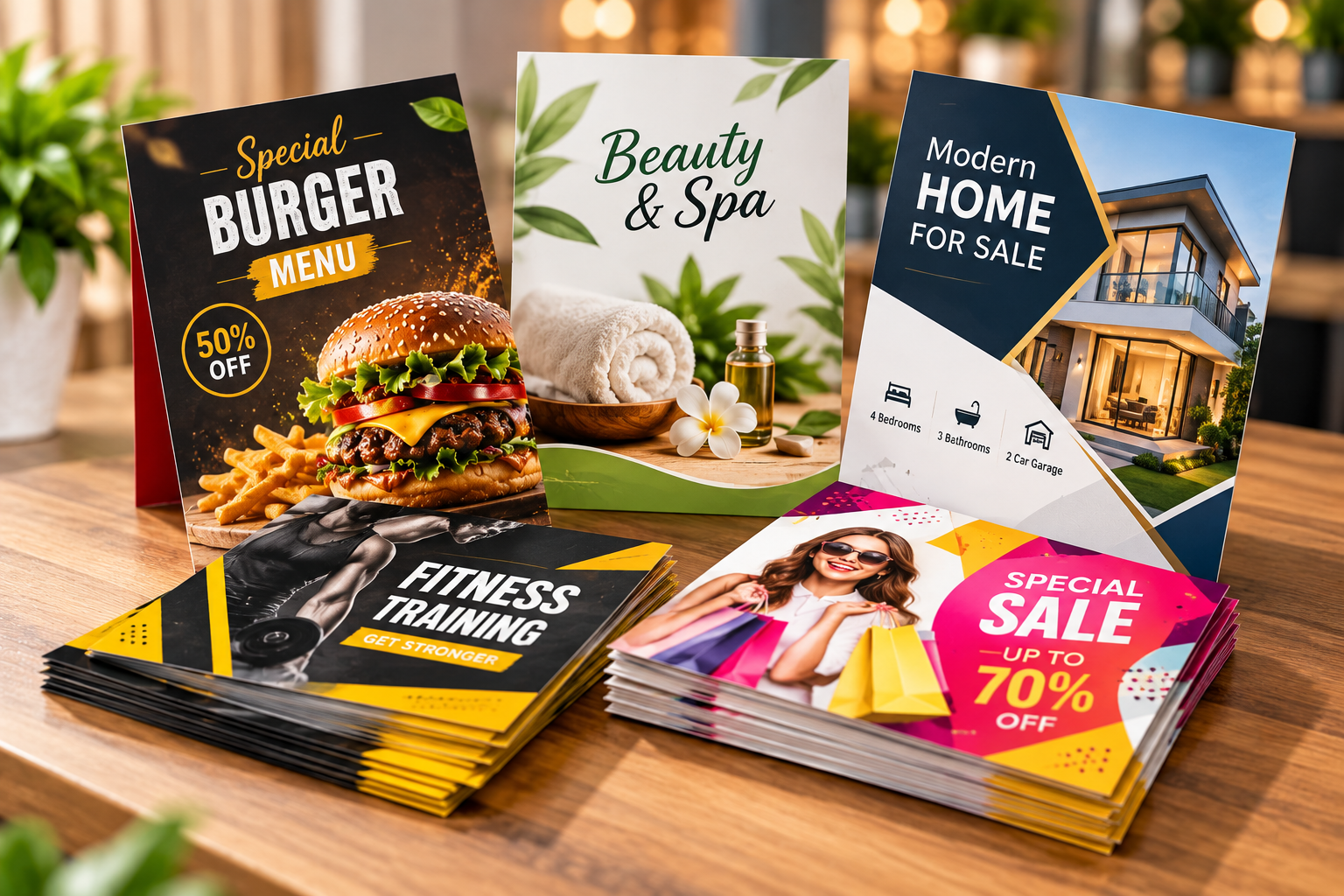
Handbills, single and double-sided flyers, tear-off coupon flyers and shaped handouts.

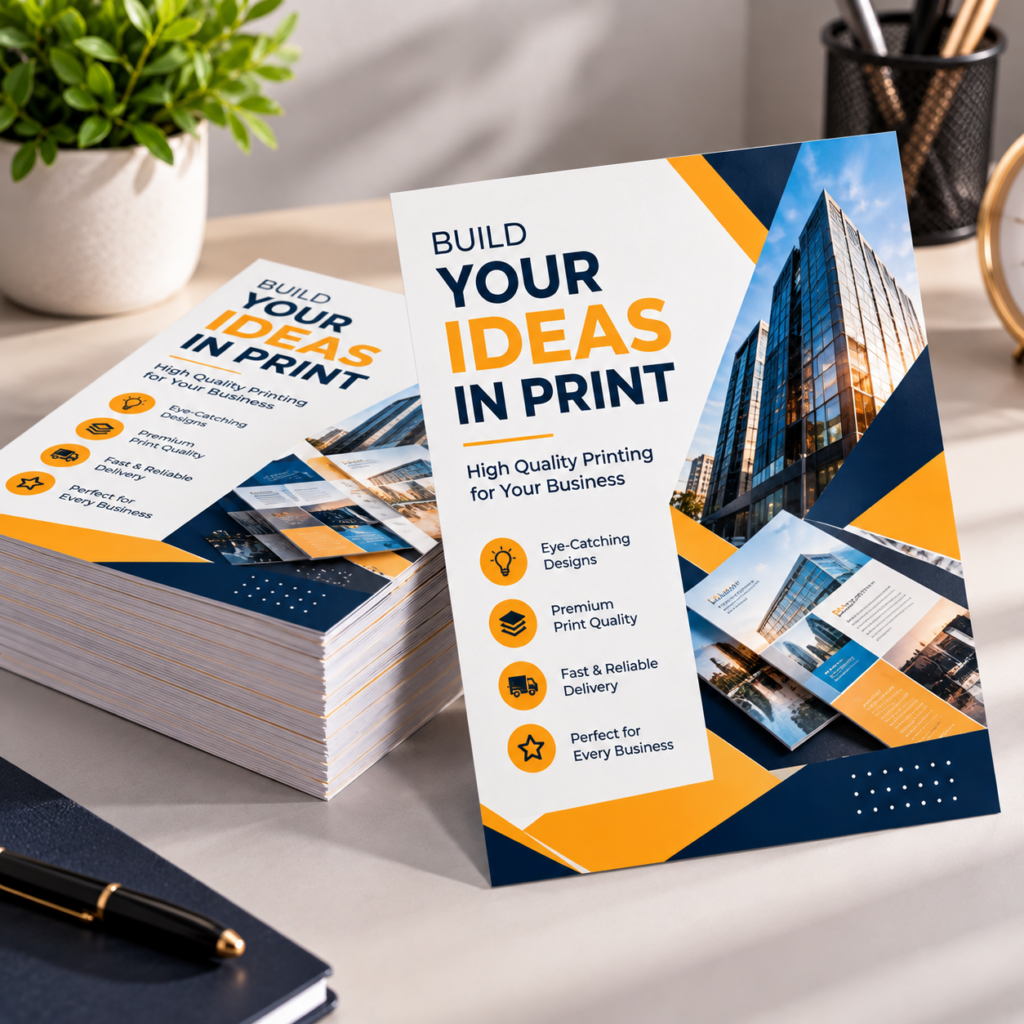
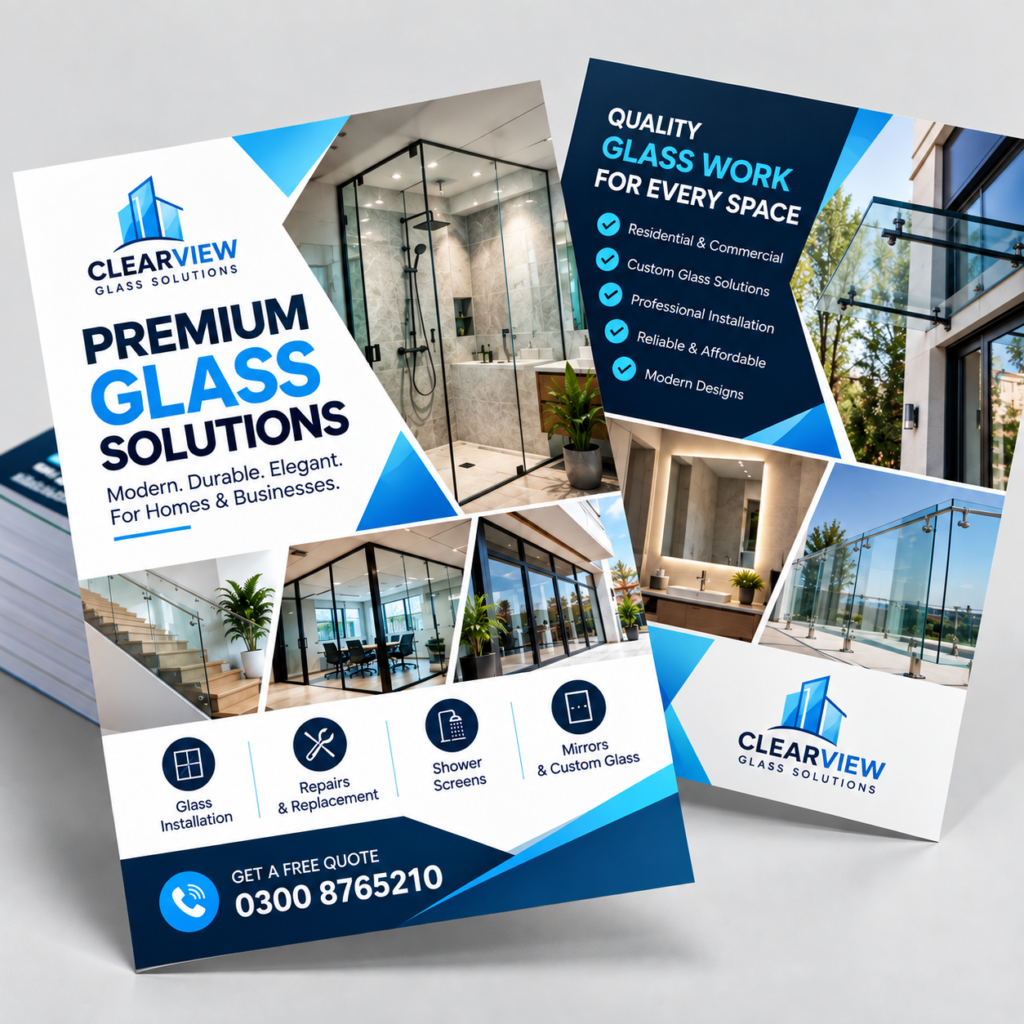
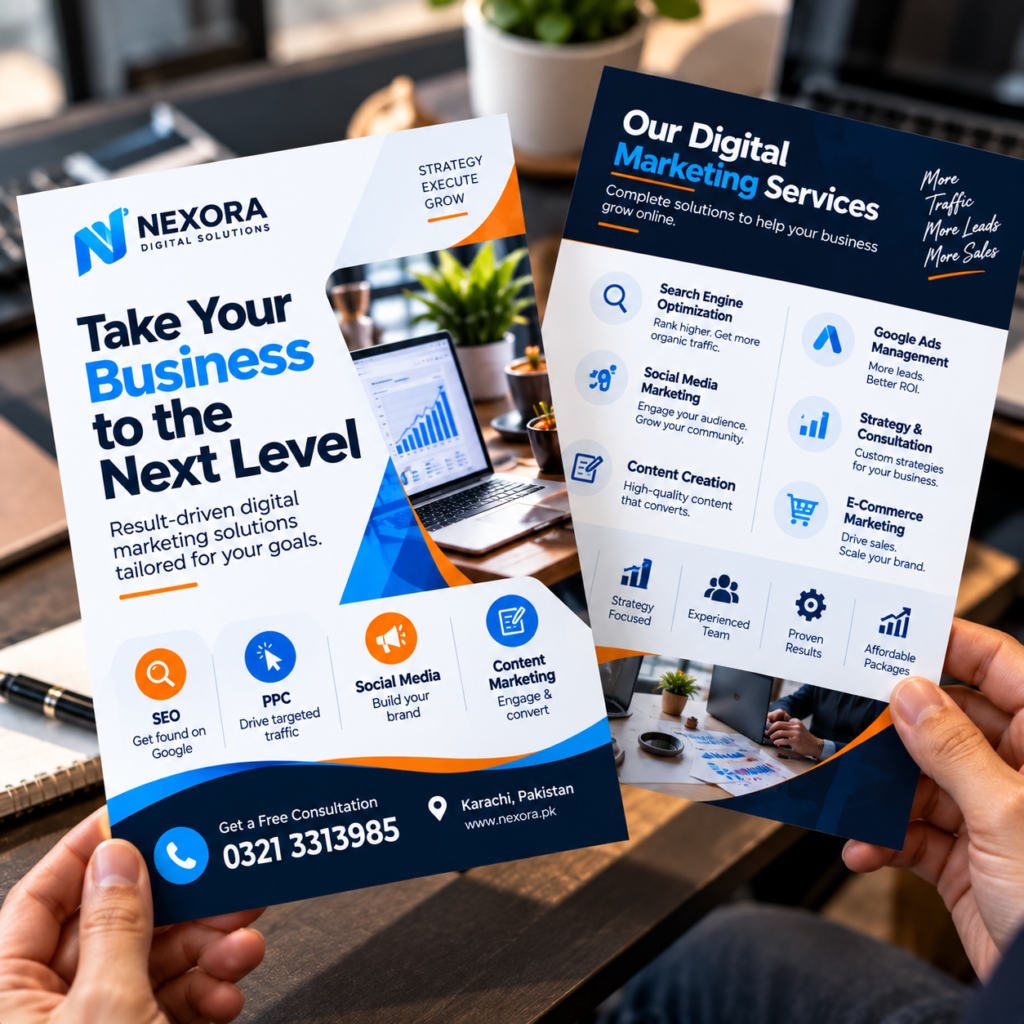
Double-sided flyers provide extra space to promote your business,…

A flyer is bought by the thousand and judged in three seconds, so the choices that matter are size, how many sides you use, and whether anything survives after the flyer itself is thrown away.

The workhorse. Big enough to carry an offer and a photograph, small enough to hand over in quantity and to slip under a gate. If you are not sure, this is the size to start with.

Twice the space, for a service list, a rate card, a menu of packages or anything a customer is meant to keep and refer back to rather than glance at.

The high-volume size. Cheapest per piece by a distance, which makes it the sensible choice for large distributions where the message is short and the offer does the work.

Offer on the front, detail on the back. Costs very little more than single-sided and gives you somewhere to put the service list without crowding the front panel.

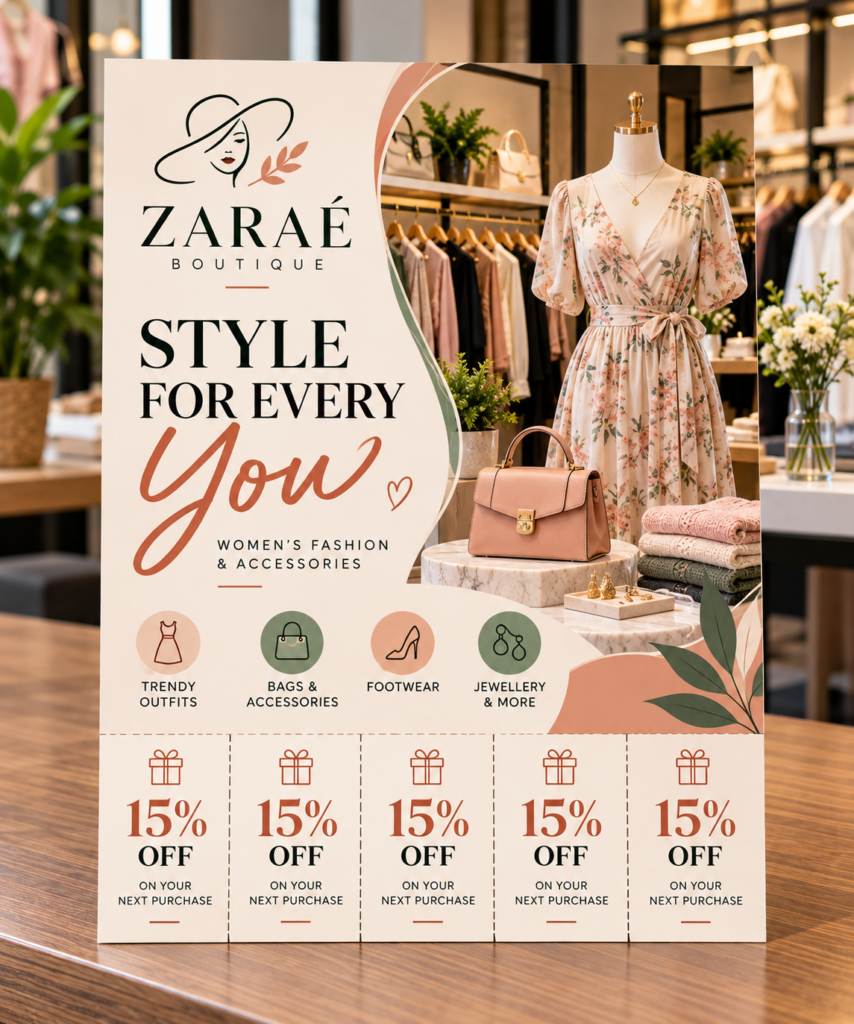
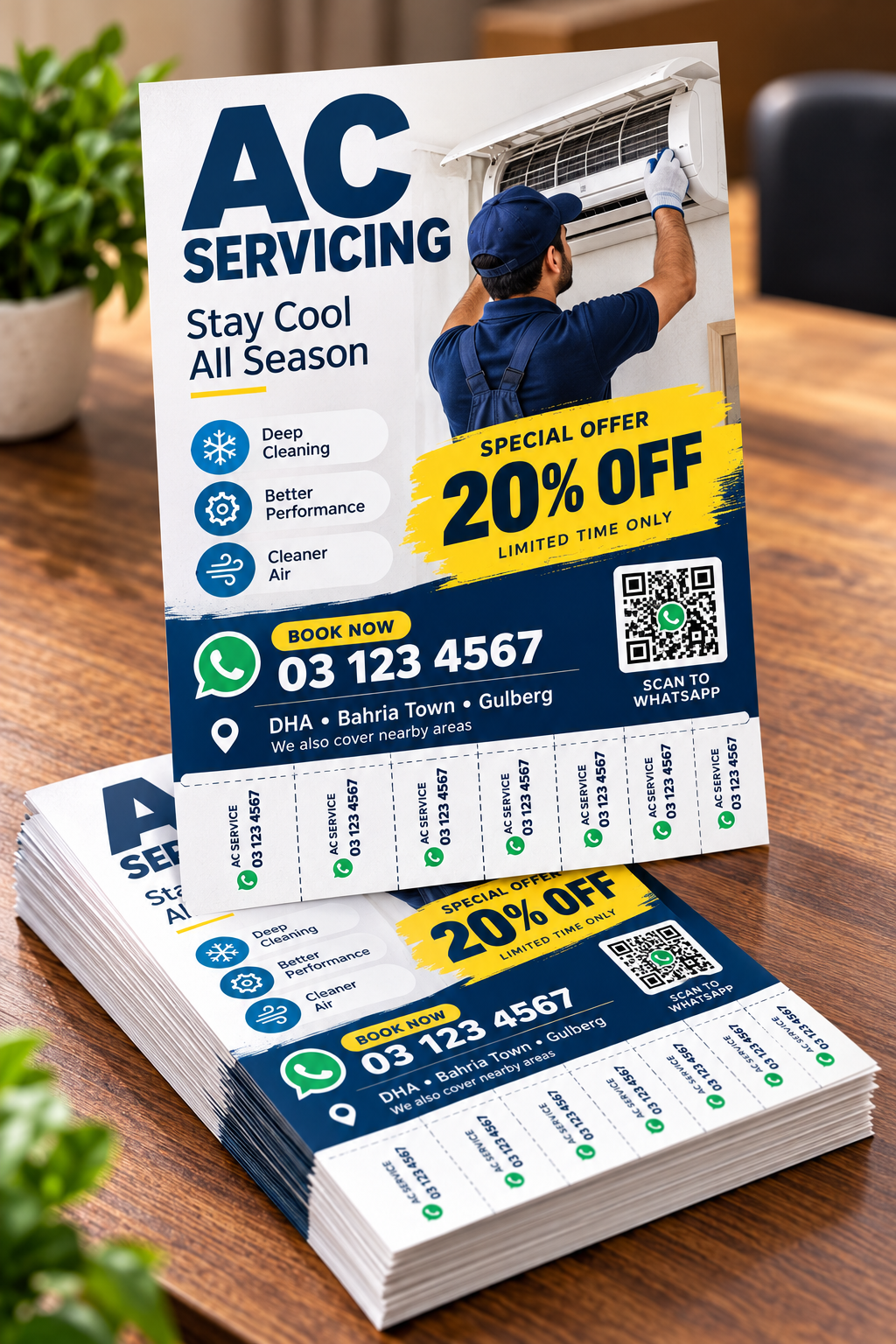
A perforated section the reader tears off and keeps. The flyer goes in the bin within the hour; the coupon with your number on it ends up in a drawer or a wallet.

Cut to an outline instead of a rectangle, or with rounded corners and a punched hole. It costs the same as a rectangle here, and it is the cheapest way to not look like everyone else.
Sticking to standard sizes keeps the price down, because they cut economically from a sheet.
A3 is the largest sheet we print, so anything bigger than a poster is outside what we produce. For a flyer that is never a limitation, since past A4 you are no longer handing it to anyone.
Weight is the whole decision on a flyer. Lighter paper is cheaper and right for volume distribution where the piece is read once. Heavier paper costs more per piece and earns it back when the flyer has to survive a bag, a pocket or a month on a fridge door.

The standard flyer stock. Light, economical in volume, low glare so text stays readable in bright daylight, and meant to be handed over rather than kept.

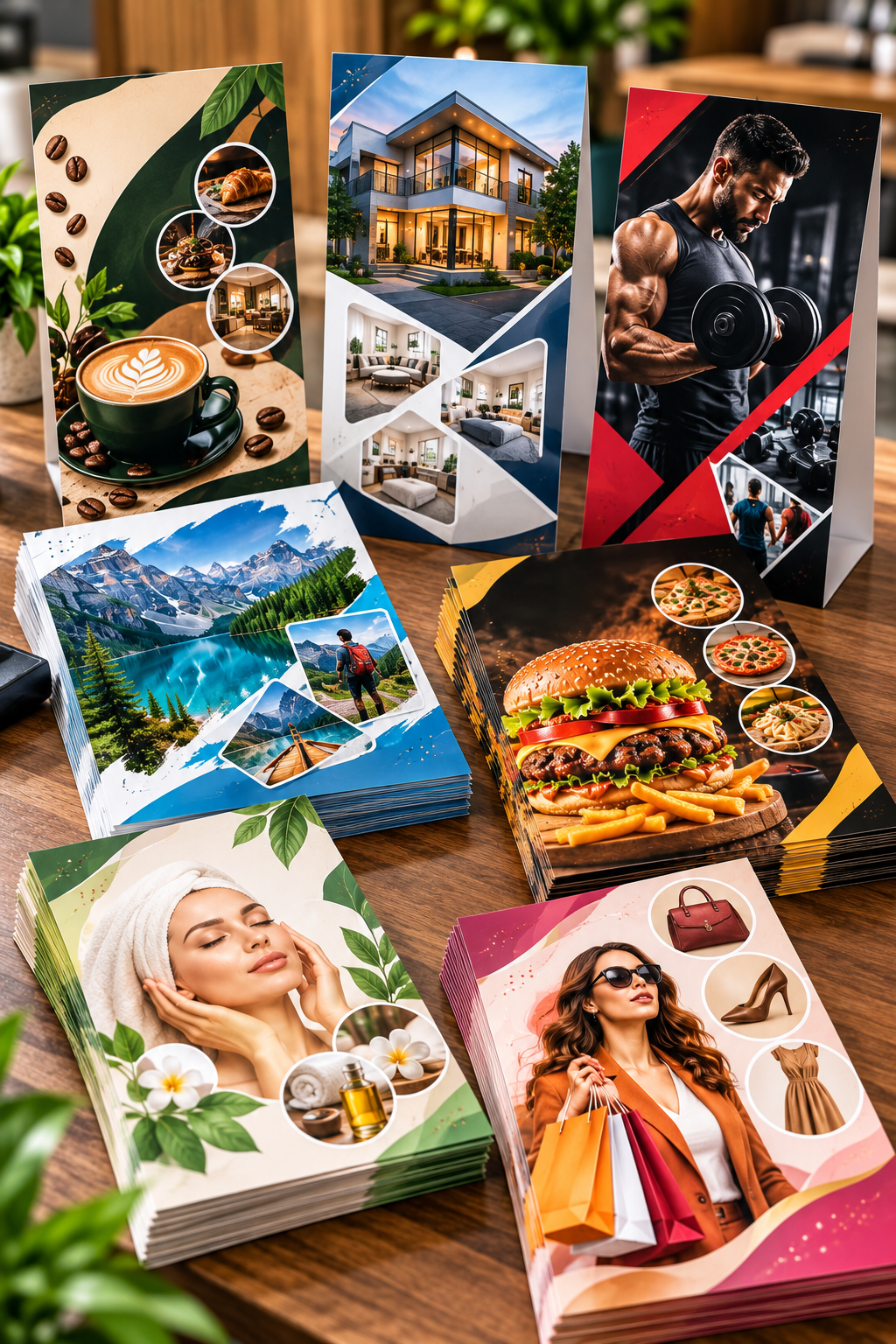
The same weight with a shiny coated face. Photographs and strong colours look considerably better on it, which matters when you are selling food, property or a product by picture.

Noticeably more substantial in the hand. Worth the difference when the flyer carries a rate card or anything the customer is meant to keep, because weight signals that it is worth keeping.

Untreated, so a price, a date or a name can be written on it at your counter. Also the right choice for information handouts where a glossy face would look like an advertisement.

A flyer that is not white gets noticed in a stack of white ones, and a single ink colour on a coloured or kraft sheet costs exactly the same as full colour on white.

Tear-off coupons, shaped outlines, rounded corners and punched holes, all cut here from your artwork at no extra cost and with no minimum tied to the shape.
A flyer is read at arm’s length by someone who has already decided it is junk. You have about three seconds and one line to change that.
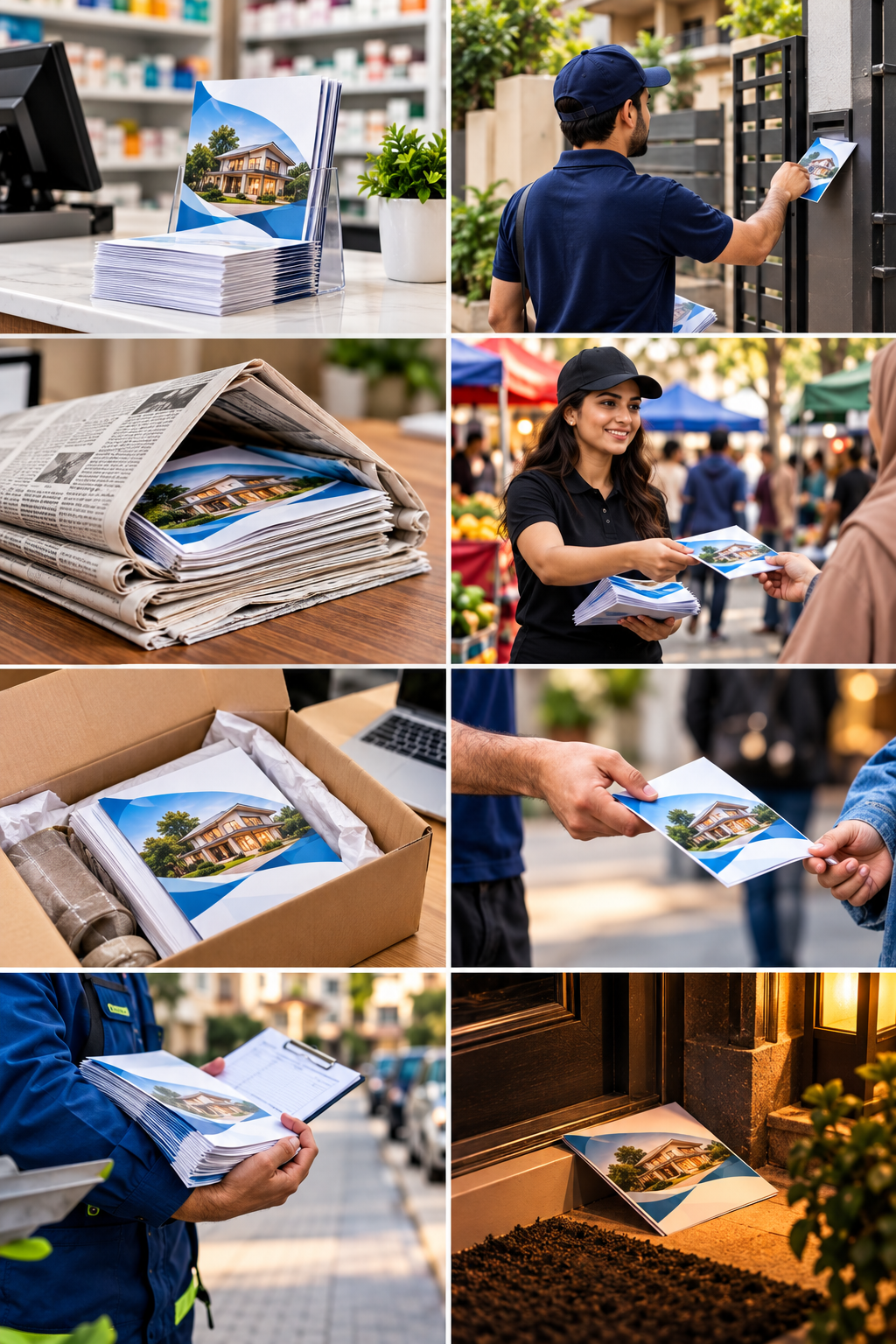
Where the flyers go decides the result far more than what they cost to print. Each route reaches a different person.
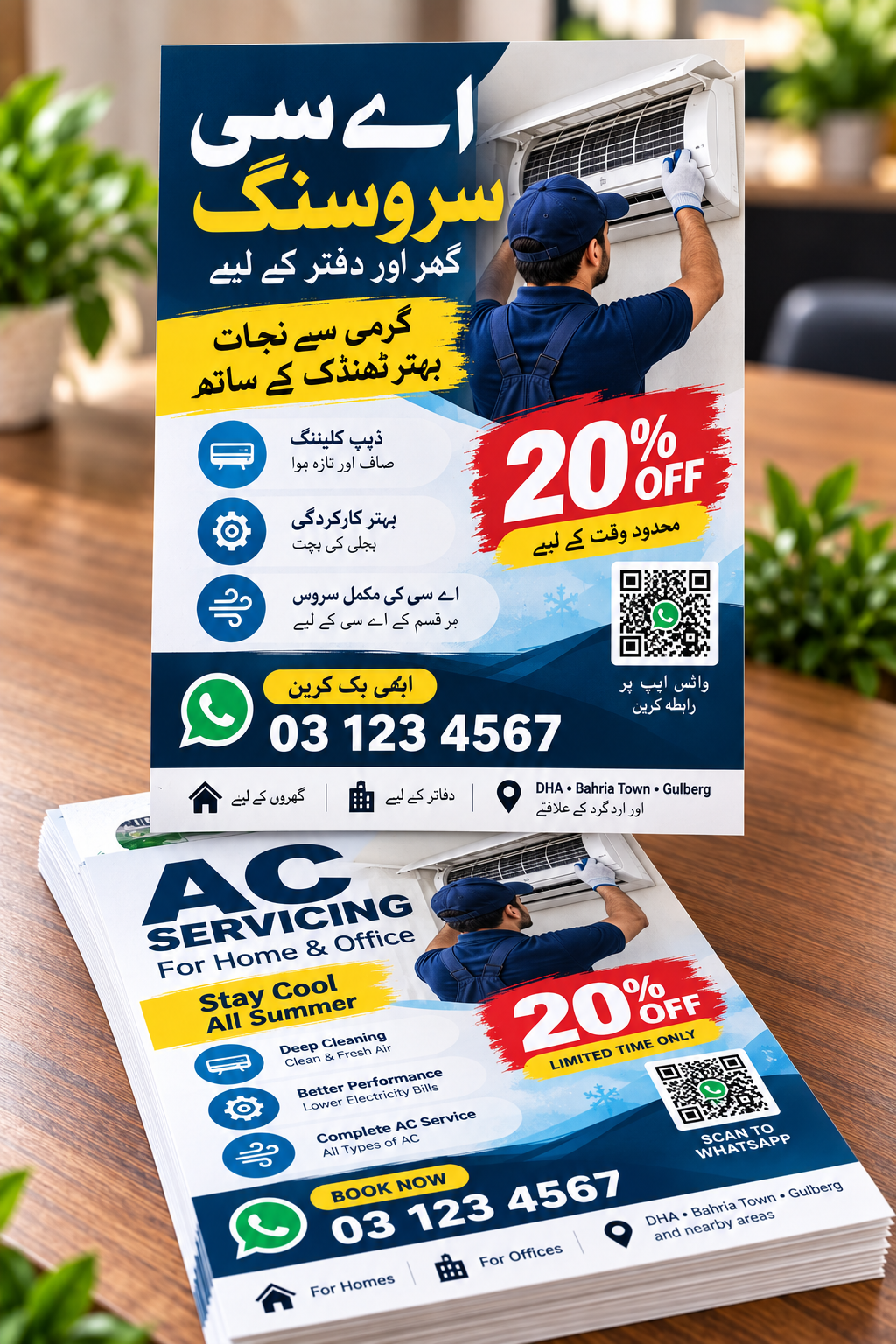
Of everything on this site, the flyer benefits most from Urdu. It is handed to whoever is standing there, and an English-only flyer loses a large share of that audience before it is read.
Sindhi and Pashto follow the same rules and are worth considering where your distribution is concentrated outside the major cities.
Flyers are cheap enough that people order without thinking, which is exactly why so many runs end up in a bin unread.
Perforated coupons, shaped outlines, rounded corners and punched holes are cut here from your artwork, at no extra cost and with no minimum tied to the shape.
The same flyer with a different code per area, per shop or per distributor, so your responses tell you where they came from. It costs nothing and most printers will not do it.
Resolution against final size, colour mode, bleed and safe areas, plus a scan test on any QR code in the artwork. Problems come back to you while they are still fixable.
If the design is unreadable at arm's length or the offer has no deadline, we will say so before you print thousands. Quotes are in PKR.
Choose a product from the range above, then set the size, the weight, single or double-sided, any coupon or shape and the quantity.
Upload a print-ready file, or send your offer, logo and photographs on WhatsApp and our designers will lay the flyer out for you.
You get a proof of both sides with trim and bleed marked. Check the offer, the deadline, the number and any code before approving.
Printed, cut, perforated where needed and boxed, then delivered in Karachi or couriered nationwide. Files stay on record for reprints.
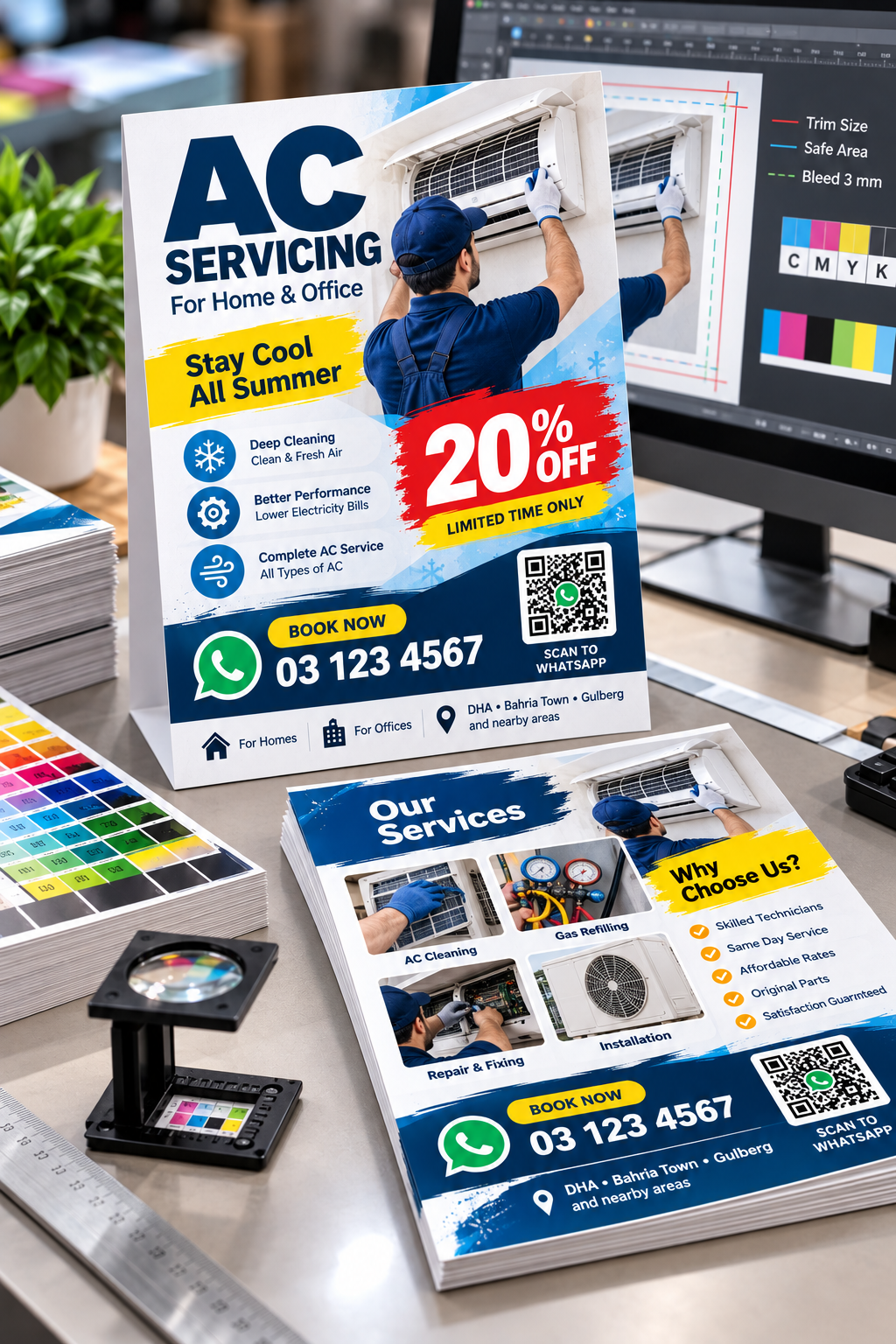
Flyers are simple to set up, and the mistakes are almost always about resolution and margins.
No artwork yet? Send your offer, logo, photographs and the area you are covering, and our design team will build both sides before it goes to proof.
Who you are handing it to decides the language and the size. What you want back decides whether it needs a coupon.

AC servicing, water tank cleaning, pest control, plumbing and solar. Seasonal timing does most of the work here: the same flyer is a different business in April than in December.

A short menu and a first-order code, dropped into nearby offices and apartment blocks or slipped into delivery bags. The code tells you which blocks to repeat.

Block-by-block drops announcing a listing, a project or an open viewing. Number the tear-off coupon by street and the responses map your demand.

Admission and enrolment drives in the residential blocks around the campus. Distance is your strongest argument, so lead with the location rather than the curriculum.

Camp announcements, test packages and new service notices, usually bilingual, where the information matters more than the branding.

Sale periods, new stock and seasonal offers for the streets immediately around the shop. Local reach beats wide reach for anything people walk to.
Cost per flyer falls as the run grows, and flyers fall faster than most jobs because several cut from one sheet. Quotes are in PKR and cover the paper, printing, cutting and any perforation.
| Quantity | Cost per flyer |
| A test batch | Highest per piece, and worth doing first |
| A few hundred | Noticeably lower |
| Around a thousand | Best value on most jobs |
| Larger runs | Quoted per job |
Flyers are bought by the thousand and wasted by the thousand, so the run is worth planning around the distribution rather than the unit price.
Reorders are simple. Your file stays on record, so a repeat run needs no new setup and no new proof unless the offer or the code has changed.
Smaller than most printers will take. A test batch for one block, or a short run for a single event, is a normal order here rather than something we turn away. Tell us the quantity you have in mind and we will confirm it with your quote.
A5 unless you have a reason not to. It is the standard handbill, it carries an offer and a photograph comfortably, and it is easy to hand over. Go to A6 when the message is short and the quantity is large, and to A4 when the flyer carries a rate card or something the customer will keep.
Usually yes. It costs very little more and gives you room for a service list or an Urdu version without crowding the front. Put your phone number on both sides, since you cannot control which way up the flyer lands in someone’s hand.
130gsm for volume distribution, where the flyer is read once and thrown away. 170gsm when it carries a rate card or something meant to be kept, because the extra weight signals that it is worth keeping. Plain uncoated paper if anyone needs to write on it.
Yes, perforated so it separates cleanly, and it is the most useful thing you can add. The flyer itself is always thrown away; the coupon survives in a drawer or a wallet. Repeat your phone number on the coupon rather than just a code, and we can number or code them by area so you can measure the response.
Yes, and it costs the same as a rectangle. Any outline you draw, rounded corners, or a punched hole so the flyer can hang. There is no cutting die to pay for and no minimum tied to the shape.
Yes, at no extra cost. The same flyer with a different code, number or phone extension per area, per shop or per distributor. It is the only reliable way to know which part of a distribution worked, and it is the single most useful thing most people never ask for.
Yes. Send your offer, logo, photographs and the area you are covering. Our designers build both sides and send a proof, and we will tell you honestly if the headline will not read at arm’s length or the offer has no deadline on it.
Yes, and for street and gate distribution it usually reaches far more people. Lead in Urdu with English contact details, keep phone numbers in standard numerals, and write the Urdu rather than translating an English headline word for word. Send it as outlines or a print-ready PDF, and export from InPage to PDF rather than sending the .inp file.
Only if they are 300 DPI at final size. Pictures taken on a phone and forwarded through WhatsApp arrive heavily compressed and will look blotchy at A5 or larger. Send the original files straight off the camera or phone rather than a forwarded copy.
Across most of them, and the list keeps growing. The flyers we print regularly go to home services and maintenance, restaurants and takeaways, property and real estate, schools and academies, clinics and pharmacies, and shops and showrooms.
The trade matters less than the offer. If your line of work is not named above, tell us what you are promoting and where you will be handing it out, and we will tell you what suits it.
Yes. Orders are couriered anywhere in Pakistan, including Lahore, Islamabad, Rawalpindi, Faisalabad, Multan, Peshawar, Hyderabad and Quetta, and delivery within Karachi can be arranged directly. Flyers are boxed flat so they arrive without curling at the edges.
Pick a product from the range above and order on the site, or send your requirement on WhatsApp with the size, paper, single or double-sided, any coupon and the quantity. We will come back with a quote in PKR before anything moves forward.
Send your offer and logo on WhatsApp and tell us where you will be handing them out. We will come back with size, paper and quantity options and a quote in PKR.